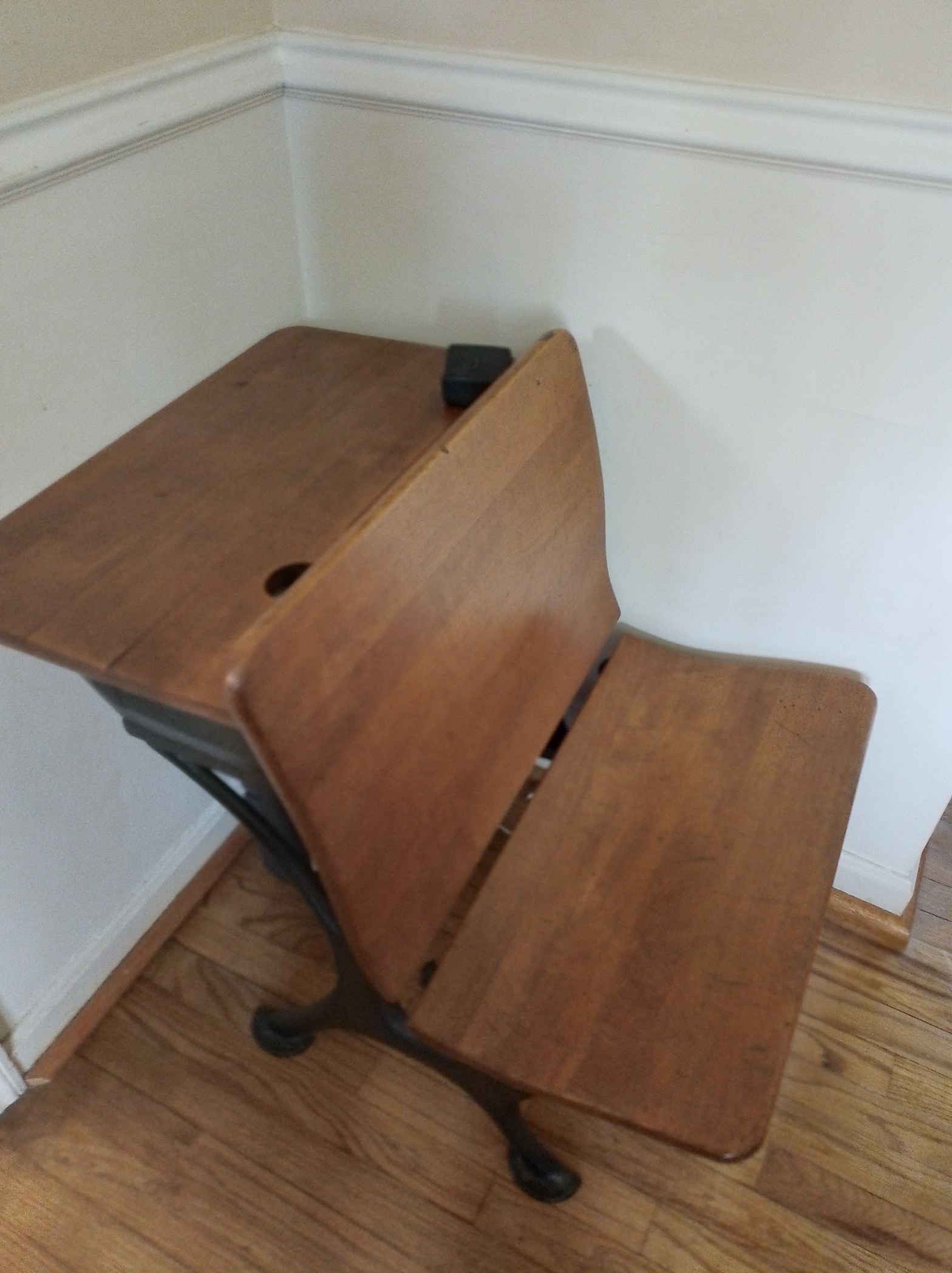
“Tomorrow you are going to teach long division,” said the teachers’ manual my nurse-mother was reading. It was China. Decades ago. Her husband, my Dad, was a medical missionary and she ran the house, helped at the hospital, raised the children, led discussion groups, and above all, taught her children from the Calvert Course that supplied all tuition, equipment, photos, and big black pencils for new learners. The accompanying manual taught my mother how to teach. Some of my siblings were taught from the Calvert course up to high school level. Even as a seven year old I dreaded the nearness of the green pages…..exam days!

When we entered statutory schools back home, we were usually advanced in academic studies, but wow, did we have a lot to learn about social interaction!
Recently, I thought of Mom’s teaching as I visited Lorrie my niece, teacher of 10 – 11 year olds, whose dedicated, creative approach left me spellbound. Among many other activities, she introduced Friday’s Genius Hour, where the children had opportunities to learn new things not in the curriculum (like cursive writing).

She wrote a poem for teaching long division, and the music teacher turned it into a rap. Not fully satisfied, she then made up a game where the class was divided into two columns working across from each other, to check their comprehension of this complex mathematical challenge. “Why the game?” I asked. “To be sure that every single person really understood every step of long division”, she said.

That’s what real teaching involves. You have to watch each learner intently to understand if/how they are picking up information, continually modulating your brain’s output in as many methods as necessary for them to absorb it. All of the time.
And tomorrow you start again to re-teach it in a totally different way, because students come with a multiplicity of learning pathways, plus a whole background of history – health, brain function, abuse, and anything else that blocks absorption.


That’s in the classroom. Outside the classroom the teacher is dealing with frequent curriculum changes from the government, arbitrarily imposed, that have nothing to do with the needs of your own learners. Plus mountains of unnecessary recorded paperwork… just to keep the school from being shut, or deemed to be “failing”.
So, why be a teacher? There’s a framed statement in the room where Lorrie did all her zoom teaching during COVID. It says: “A hundred years from now it will not matter what my bank account was, the sort of house I lived in, or the kind of car I drove. But the world might be different because I was important in the life of a child.”
World Teachers Day is Thursday, 5th of October. In the Comments section, share a story about a good teacher you have had, and why. It will inspire us all.
Ta’mia/Falafel

“The Copts are the true Egyptians”, said my friend Mona, and certainly her profile did look like Nefertiti’s. The Egyptian Copts eat this dish for breakfast, lunch, or supper. Its recipe is so so so old that its origins are lost in the mist of time. This is saying a lot, because Middle Eastern cuisine can be traced back for 6000 years, older than the Pyramids at Giza. During Lent, when the Copts don’t eat meat, they make piles of these and pass them out to the grateful community.

Here’s another recipe from my Street Food box. My comments are in italics.
Ingredients
Falafel blend: 3 teaspoons ground cumin, 2 teaspoons ground coriander, and ¼ tsp sweet smoked paprika.
200 grams (7 ozs, 1 cup) dried chickpeas, soaked in cold water overnight, then drained and rinsed.
2 cloves of garlic, grated or crushed
1 small onion peeled and chopped.
30g of coriander leaves (cilantro — 5/8 of a cup, 1.1 ozs – approx.)
30g of parsley (ditto as above)
3 tablespoons gram (chickpea) flour or plain flour if you don’t have it
1 tsp baking powder.
Oil
In a food processor, pulse the drained chickpeas, garlic, onion, gram flour, baking powder, coriander, parsley, (including the stems) and 1¼ teaspoon salt into a coarse paste that you’re able to press into a cohesive ball. It will become a lovely paste. You may have to scrape down the sides of the blender a few times, but eventually the whizzing blades will pull the food into a vortex. The scent is magnificent!
Form heaped tablespoons into 20 balls (mine made 15). Leave them in the fridge to firm up (I shaped them the way they came in Egypt, in patties.)
From then on, the recipe tells you to fry in deep oil for 5 minutes until golden brown and drain on kitchen paper. But I didn’t. I froze them solid, carefully placed them on a paper-lined baking tray, brushed with oil and baked in a hot oven for 20 minutes, about 15 minutes in the air fryer.
They want you to serve them with warm pitta breads, hummus (more chickpeas!) chilli sauce, and salad. But when you sneak one, for quality control of course, what do you think of them on their own?

 foodthatbuildscommunity.com
Fascinating that your niece’s class has learned morris dancing! How did she learn it, or did she get someone in?
LikeLike
I never thought to ask! She was just rattling off some of the things she’d done with them in Genius and that was one of them.
LikeLike