

A double page full-colour spread in the local newspaper described the last football game of the City’s asylum seekers, before they were scattered across England into dispersed housing. Organising football and cricket teams were not the only evidences of the care and interest our City of Sanctuary gave to 153 asylum seekers who, a year ago, were deposited secretly into a hotel.
The City was generous
Clothing, free gym sessions, English classes, sports equipment, an invitation to the meet the Mayor, bicycles to encourage getting out to meet people, music sessions, parties, mobile phones, and this wonderful opportunity to play football every Wednesday — these were only some of the opportunities on offer. One football player even qualified for a coaching license. Why such vast generosity? Perhaps it was a small way to relieve the heavy burden of injustice that we the privileged, feel for the world. It was something that ordinary people could do. And did.
The City was rewarded.
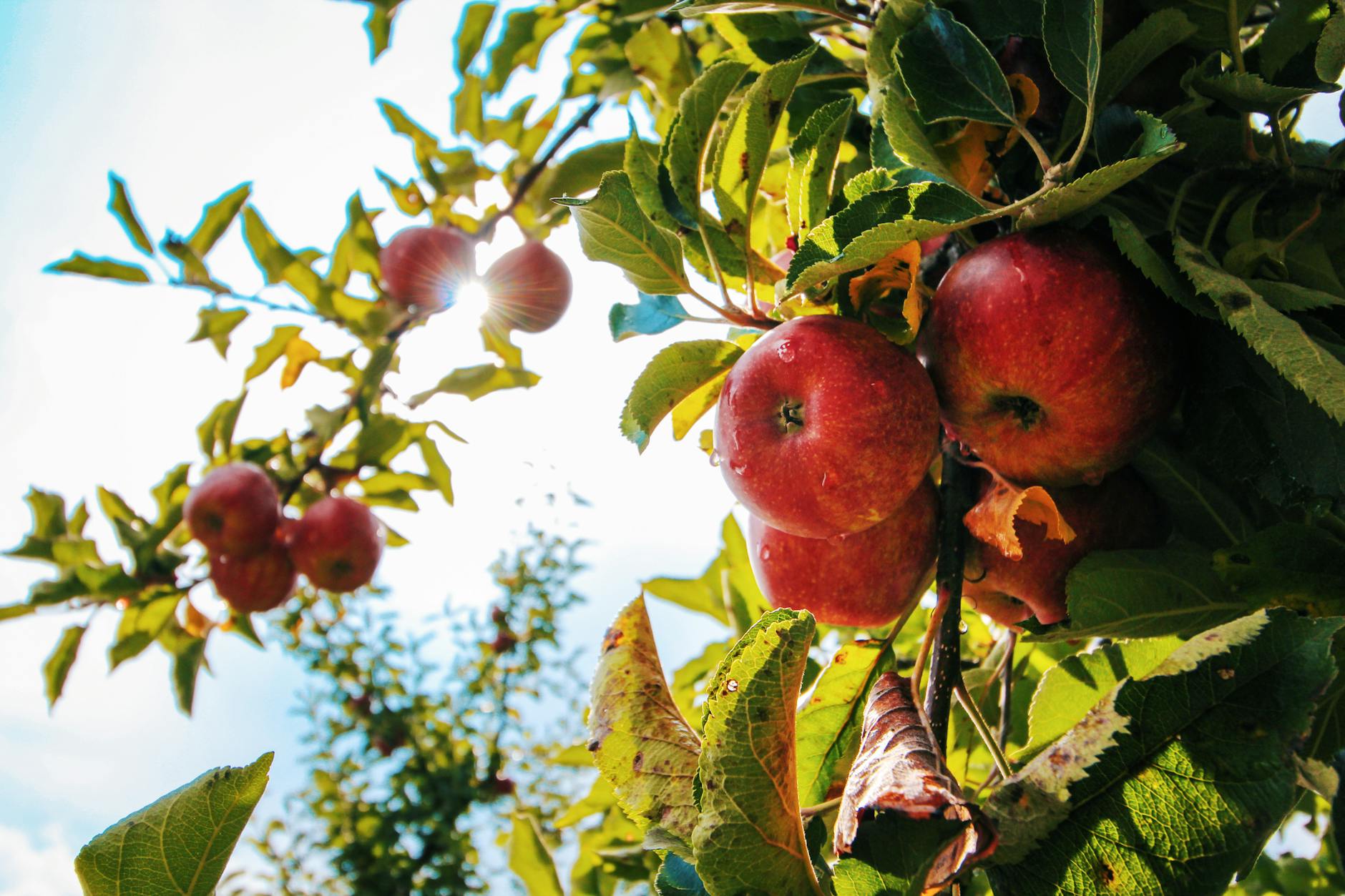
Some asylum seekers helped with the free community lunches, some volunteered in charity shops, some picked apples for the Applefest, some worked in the recycling centre (with a very impressed manager who reported that they worked harder than the staff). All of them were longing to work. Friendships were made everywhere. And perhaps, just perhaps, there was also an ease of tension when seeing people from a different culture?
Then suddenly…
…without warning, each asylum seeker was sent a message that, in a few days, they would be dispersed to housing somewhere else in England. A few were lucky enough to go to the same place together. A solitary man was moved 140 miles away. The first to be sent off was the hotel manager, who knew the men the best and the trials they had had adjusting and recovering from a horrific past. He would have been a great support during this transition, but he was already in another hotel.
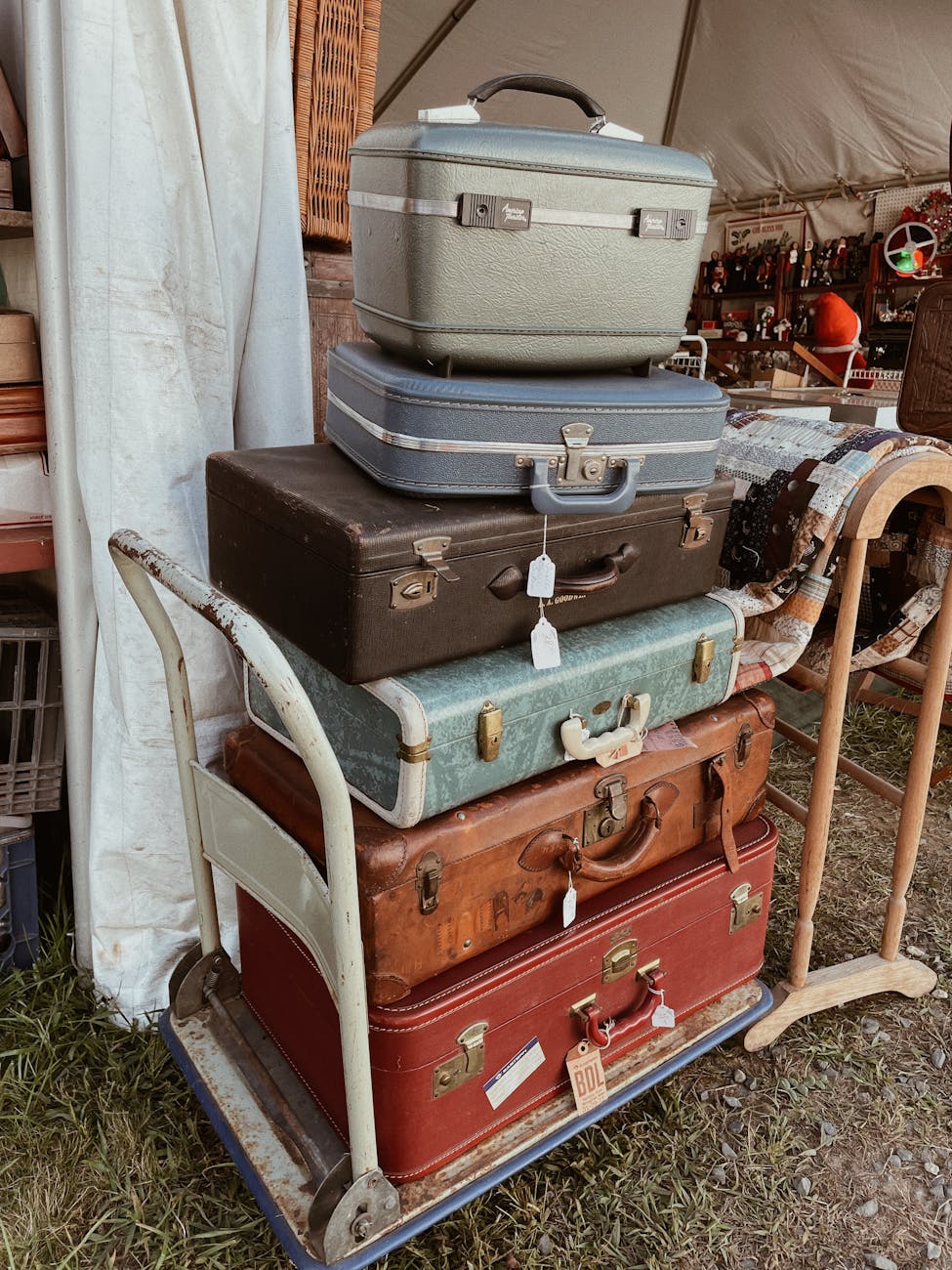

It was an honour to be one of the volunteers who worked with the men. We offered English lessons, talking and sharing, planning parties and encouraging them to learn key phrases of communication. Now we were corralling suitcases, because they came with nothing. We found out where each person was being sent, and phoned and phoned and phoned these towns, finding out about food banks, churches, welcome committees, groups offering help to asylum seekers, refugees and migrants, health services, anyone who might ease their settling-in. I was assigned the town of Wednesbury for an eighteen–year-old Eritrean, a place I’d never heard of before, and the response was underwhelming, even from the churches.
Concern
We smiled a happy face to the men, but inside we were worried. How will they settle in this hardened society? They are Middle Eastern MEN for heavens sake! They don’t know how to cook, or shop, or anything. Will people only stare, or is there anyone who could support them, make them comfortable, want to learn more of their own culture? Did anyone speak Arabic or Pashtu or Farsi? What will their accommodation be like? Can they get along with others in these houses? Is there someone for them to run to when loneliness or serious sickness engulfs them?
And were these concerns serious, or were we, like parents, secretly hoping they needed us, couldn’t manage without us? Was there a subtle, suppressed suspicion that we needed them more than the opposite? Were we glad to be needed, did it make us feel worthwhile inside? Were they crushed to say goodby to all we had given them?
No, they weren’t.
They were fizzing with excitement and laughter. After all they had been through to get here, (the experience so traumatizing that they did not speak of it), this was just another step in learning how to adapt. After all, they weren’t being bombed. They were not threatened or tortured or beaten. They weren’t one of the four young people chosen to be executed at random each week (Iran). They weren’t immersed in 24 hour sickening terror. They were still in England. They were not being sent to Rwanda, which was one of the Government’s plans to dispose of asylum seekers (even though Rwandans were applying for sanctuary in the UK, and being granted it). They were off on another adventure.
I guess it’s all a matter of perspective, isn’t it?

Solace! That’s what I needed. I headed for the kitchen, of course. I knew just the book to consult. I’d bought it off a roadside stand during the Hay Festival. As I prepared, I dedicated the recipe to all the forced-homeless people in the world. It was a sacred moment.
Muhammara Dip

Here’s a recipe donated by Amran. It’s one of Syria’s favourite dishes.
Find a US standard cup, or any cup that measures around 8 fluid ozs. (about 30 ml.) Use this for all the “cup” measurements. Tablespoons and teaspoons are the same.
5 tablespoons olive oil,
1 large onion, finely chopped.
2 garlic cloves, chopped
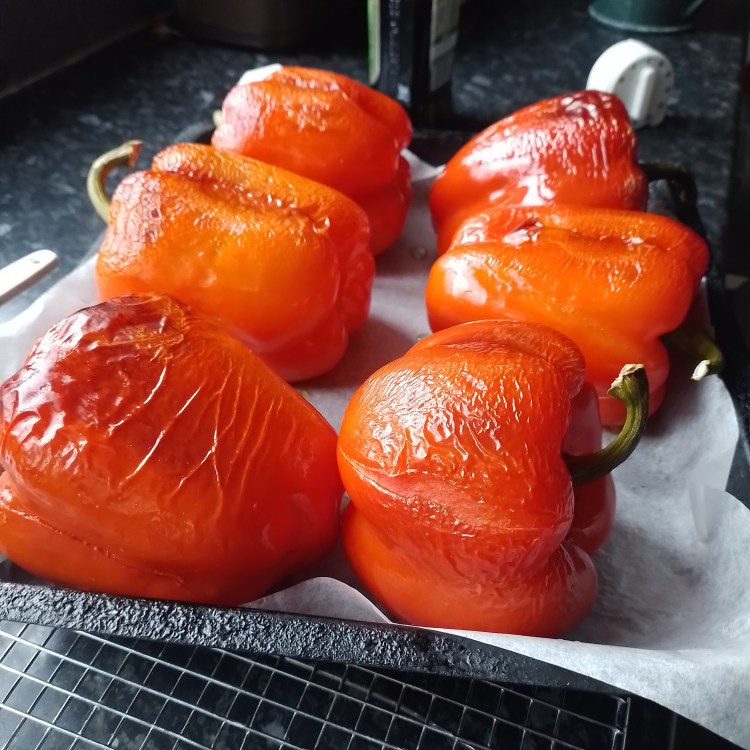
1 packed cup chopped roasted red peppers*, about 1 1/2 peppers.
1 cup walnuts, toasted*
¼ cup bread crumbs
2 teaspoons pomegranate molasses
1 teaspoon lemon juice
1 teaspoon ground cumin
1 teaspoon chilli flakes
Salt and pepper
Toast or pitta bread for serving.
Heat 1 tablespoon of the oil in a frying pan over medium-high heat. Add onion, garlic, and 1 teaspoon salt. Cook, stirring often until the onions are translucent and soft, 10 – 12 minutes.
Transfer to the bowl of a food processor and add remaining ingredients, including the rest of the oil. Pulse until you have a thick chunky paste. Season with salt and pepper.
Serve with toast or pittas.
*Peppers and Walnuts. I know that you can buy jars of roasted peppers, but I’d never roasted peppers before. After roasting, I turned the oven off and put in a tray of walnuts. They toasted nicely without burning.
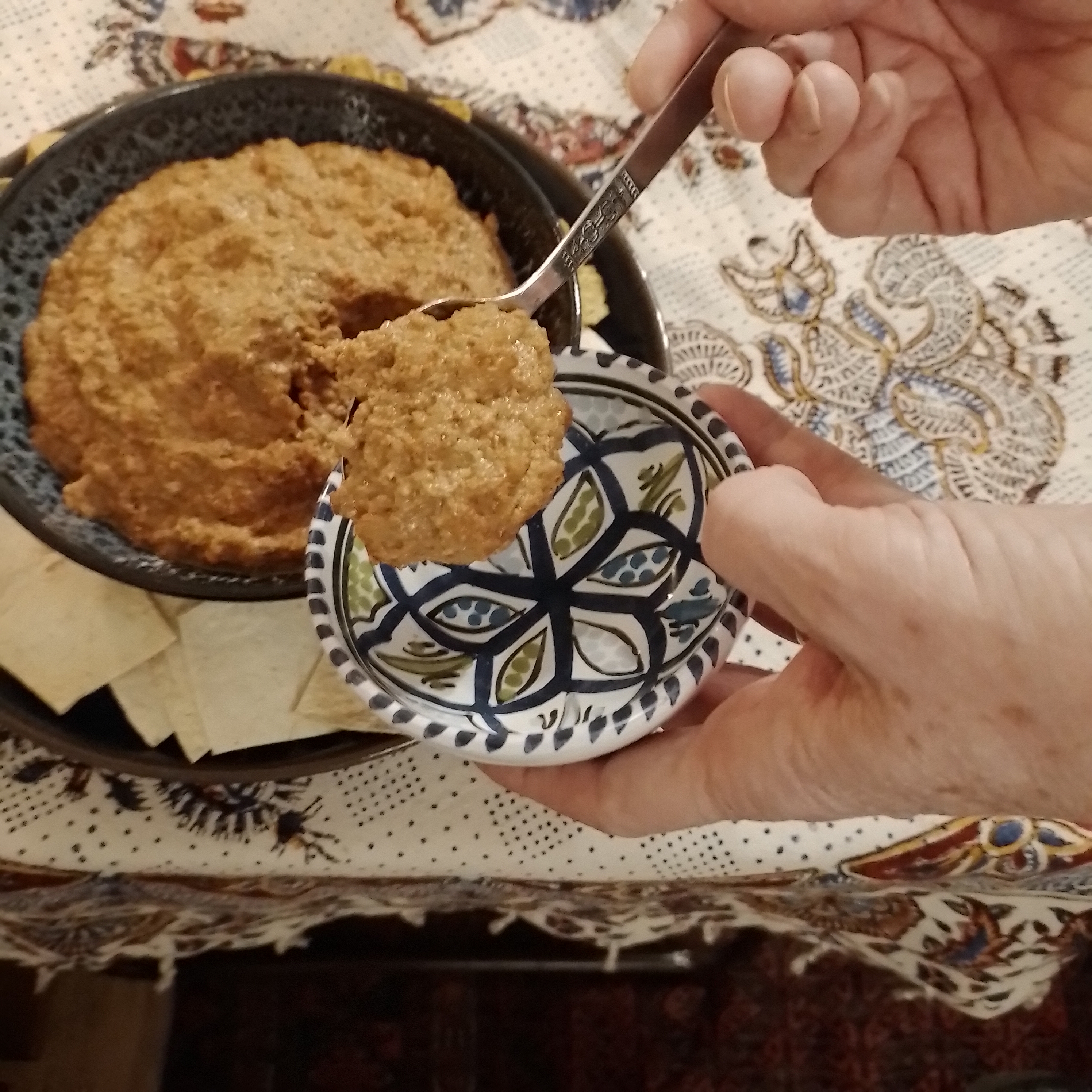


Beautiful, and bittersweet! We love muhummara, a lovely comforting treat.
LikeLike