
The answer is probably “no”.
(This is a true story.) The telephone rings. You know that ominous feeling? With trepidation, I (the adult education manager) answer it. “I’m sorry that I’ll have to withdraw from the embroidery class” the voice says. The voice is attached to Mrs Smith, a retired woman who absolutely loves embroidery, has made new friends, has developed her craft, and frequently tells me how it enlivens the rest of her week. “I can’t come any more. I’ll be looking after my new granddaughter while my daughter goes back to work,”. A long long sigh follows, then, “oh well, I’ll be back in 5 years.”
“No, you won’t,” I say to myself. “There will soon be another one on the way. By that time your own life will be so sucked into another’s agenda, the ‘you’ you are now will be wiped out completely. You will be snapped back into the child-rearing loop again. Say goodbye to your Third Age.
(Worst case scenario.) And, fast forwarding to the end of her life, I can envision the rapturous eulogy at her funeral of what a “devoted mother and grandmother she was”. That’s all.
Today, with increasing financial restraints on the working poor, this is a common story. And we grandparents do it, don’t we? We can’t say no to our adult loved ones. The thing is, those of us who administer continuing education will probably be the only ones who hear the despair in the hearts of those who give it up.
Story number 2. Mr Smith arrives with the glowing news that he’s retiring. “Great, says I,” so what’s your next adventure?” Answer: “my wife has a list of things that need doing about the house. And I’ll be taking the grandchildren to school and from school.” My unspoken response: “that’s their agenda. What’s yours?”
This is the brutal truth. In many cases.
Hang on! It doesn’t have to be! I know people who hold onto their own lives while being totally involved in their families. How?
Attitude.
There is so much adventure waiting for people throughout their entire life. How freed, how emancipated, how delighted they are! There is a wholeness of being about people like these: hobbies, skills, volunteering, supporting others, discovering new abilities secretly locked inside them.
Even those who are involved in long term caring search for, and find, small pockets of time for their favourite interest, within this heavy responsibility. These creative self-times are absolutely vital to wholeness. Because when, with shock, the caring suddenly ends, they can be left with, no other identity, at all.
Learning as fundamental to life.
Goodby to the Third Age? Maybe not. What is happening to those positive others? They are curious. They are creative. They are learning. Lifelong. Not a social add-on. As vital to them as healthy eating, sleeping, and activity.
The work-dreary are re-vitalised. Multi-age learning is especially fruitful: shared history mingles with newer world views – a heady mixture! And, at the time when fellow older friends are popping their clogs simultaneously, those with decades of adventure behind them still have a solid friendship base to hang out with.


Making time for lifelong learning.
The active human spirit is brilliantly creative. Learning-committed citizens squeeze creativity into and around the most unlikely scenarios: prize winning novelists with only one afternoon a week to write; getting a GCSE during cancer treatment, book clubs, free online courses woven in and out of caring for a child or an failing loved one, starting ballet lessons at age 40 by practicing in the living room when the children are asleep, because “I’ve always wanted to learn ballet.”. Yes, it’s possible if we only believe we can.
Commitment.
It’s easy to start a course. It’s not as much fun in the middle. 90% of online courses never get completed, especially if they are free. Learners of any age who are blessed with surrounding loved ones, who urge them to persevere are a long way ahead.

Celebrate achievement
Hooray – another reason for a party! A “Rejoice with me” celebration is important at any age, by all the family of all generations, fellow learners, the neighbours, champagne, tea and cake, and speeches, especially from the grandchildren. However insignificant the course, get the certificate, frame it and have a bun fight. (OK. This might a bit far-fetched, but hold onto the dream!)
Encourage other people’s learning.
Husband John and I were invited to an Open University graduation ceremony of an 81 year old, BA honours degree. “Don’t you want your family to come?” I asked. “No, because it interferes with suppertime”, he replied. This is the kind of dull environment some learners are doomed to live in, learn in. A bit of encouragement, even from a near-stranger, will lift the soul.
Give them your undivided attention. What if you don’t know what they’re talking about? No matter. Getting excited with their excitement is delightful.
Fourth Age
Long-time learners often slither their creativity into the Fourth Age naturally. From them you don’t hear a rehearsal of health issues. Instead, they may tell you about Shackleton’s adventures in Antarctica, or of saving the wild Bactrian camels in the Gobi Desert. Or about the book they’re writing. My brother switched from painting to writing to poetry in his fourth age. His debut book was published when he was 90. One friend insisted that he was soon to leave “this mortal coil” but while he was in the “Departure Lounge” (his term) he translated three theological books from French into English.
And so?
And so, yes, there is an alternative ending to Mrs Smith’s eulogy. It could read: “a devoted mother and grandmother, brilliant embroiderer for the Cathedral, author, poet, county councillor, ace scuba diver, Samaritan……….”.
Blessings on you all. May continued learning and creativity be to you as vital as breathing.
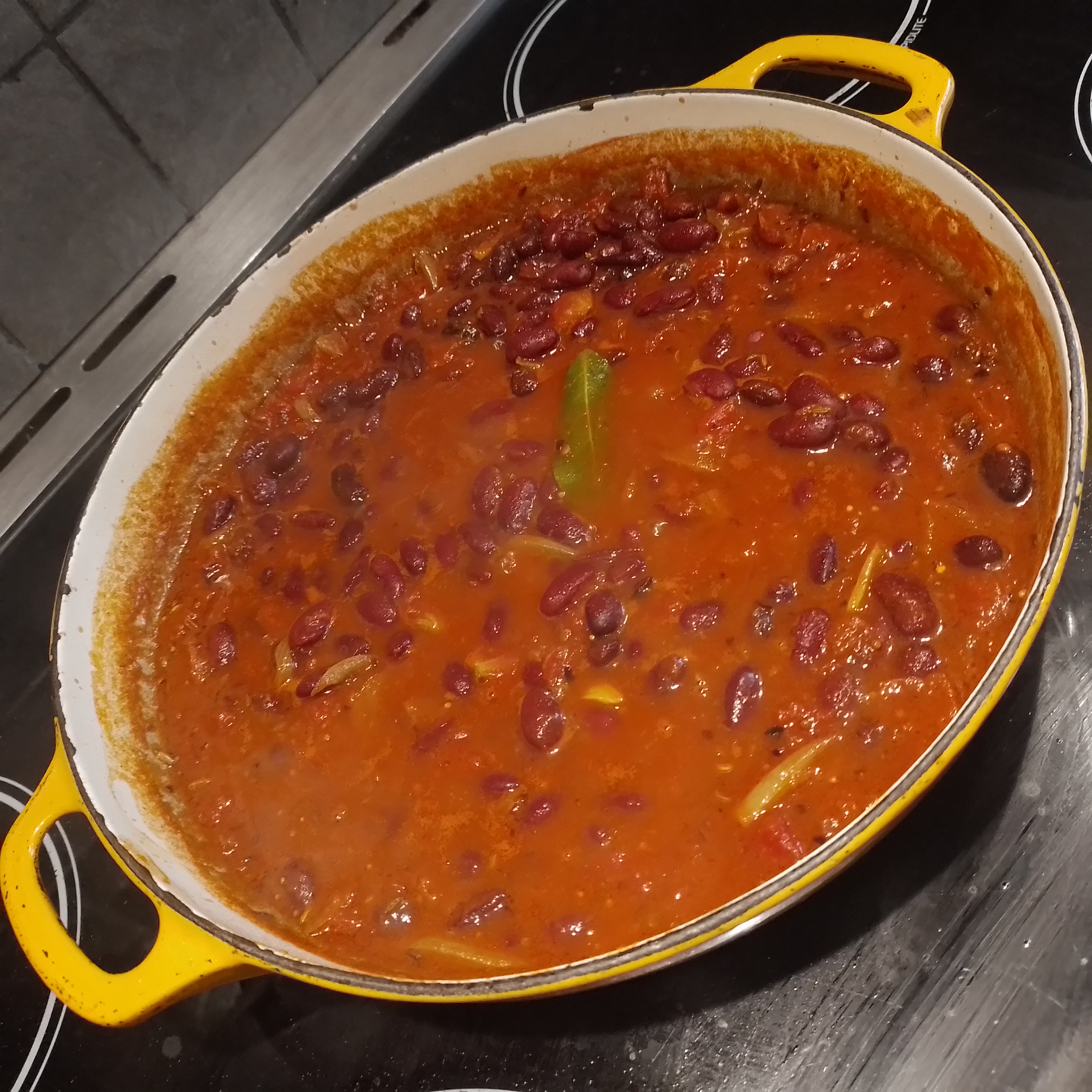
Kidney Bean Curry
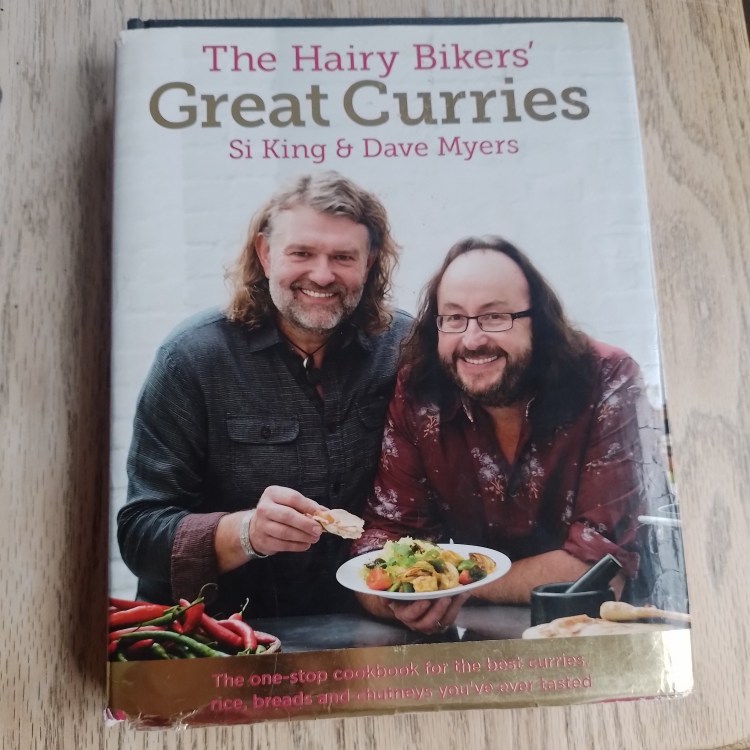
This can be served as a side dish, a Vegan meal, or a Financial Belt-Tightener. It’s shamelessly copied from The Hairy Bikers Great Curries, by Si King and Dave Myers. It takes longer to collect the ingredients, and decide what you don’t have and will do it anyway,….than it takes to cook.
Take 3 tablespoons sunflower oil, 1 tsp yellow mustard seeds, 1 tsp cumin seeds, 1 tsp fennel seeds. 2 dried long red hot chillies, 10 fresh or 15 dried curry leaves.
Heat the oil and fry these a few seconds, until seeds start to pop. Add
½ medium onion, finely chopped, a thumb-knuckle of fresh root ginger, peeled and grated. 1 long green chilli,trimmed and finely chopped, with/without seeds, 3 garlic cloves, sliced.
Cook for 3 – 4 minutes. Add
2 tsps garam masala ½ tsp turmeric.
Cook for 2 minutes more, stirring constantly. Add
A can of chopped tomatoes.
Sprinkle in A pinch of asofoeteda. Add
2 cans of kidney beans, drained and rinsed,1 tsp sugar, 1 tsp flaked sea salt. Water to desired consistency.
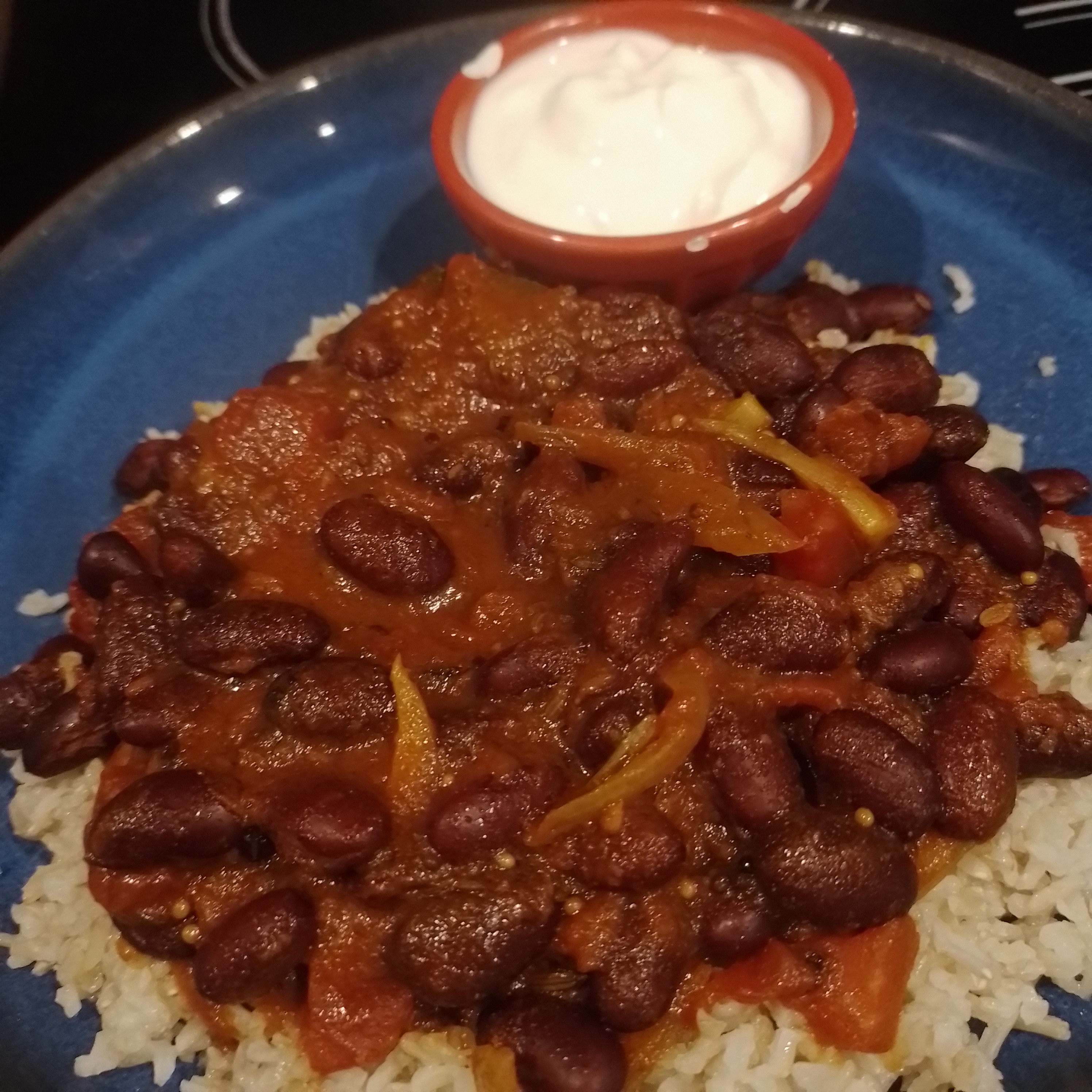
Cook for 15 minutes over medium heat. Serve. Good with yogurt.


 foodthatbuildscommunity.com
Judy, Fantastic advice for people of all ages. I have seen it so often- grandparents who wind up as the primary care providers for their grandchildren while their own kids fly off to exotic locations on holiday 3 or 4 times a year, indulge in expensive hobbies, etc. It’s great to build a bond with the grandkids as they are growing up, but remember that you raised your kids, and those “kids”should raise their own kids. Helping out occasionally (maybe once a week?) is fine, but remember that you have a life as well, and that should not be solely providing full time free child care. Having an honest open discussion from the beginning (before arrival of first grandchild) can go a long way to avoiding misunderstanding arguments, and disappointment later on…
LikeLiked by 1 person
Yes. You are right. I didn’t want to say more, but the parents have already been through the child-rearing stage, and it takes a bit of tenacity to hold onto their own lives. But I know those who do both most joyously, positively, so that grandchildren get the message that Grandpa and Grandpa are still learning, still creating.
Thank you for your comments. I have been uneasy about publishing this email, and am so grateful for support.
Judy
LikeLike
I’m not being pestered to care for grandchildren, but I am enjoying my freedom to continue activities I have always enjoyed and take up new ones. And I still have time to do a lot of the cooking etc as my wife is limited by poor sight & a painful leg.
My wife, Ann, didn’t have outside interests and now life is boring as she is very limited. She does enjoy keeping up with the family by telephone.
Ian
LikeLike
I loved reading this Judy. As ever you are full of enthusiasm and wisdom. I’ll never forget your comments “if an organism (always check the spelling!) isn’t learning it’s dying” and that the first two decades of the 21st century will be years of dysfunction.
As a “geriatric mother” (children born post age 35) my intellectual brain – which always loved to learn – seemed to go into survival mode as I cared for my new little people, grandparent support was vital to my survival. Now as I wander vaguely through the forest of “how-to-parent” growing adults (male, I might add -!age 16 and 18) – cluelessly on my part… I know I have carried on learning (how to parent and negotiate everything that entails whilst trying to work), but I feel that motherhood, wifedom and working to survive has stunted my own intellectual journey, that combined with health issues for Ray and me. I’m on the other side of the woods now. I hope.
LikeLike
I think I feel the same cluelessness in not knowing how to care for children, so I’m glad that you have described brilliantly what it feels to be a mother/grandmother. A friend told me that once, as a teenager she’d had an altercation with her mother, and the mother said, “You are my first teenager. I am learning, too.” And the friend was much more understanding of her mother, after that.
Thanks for your comments. I think they will help others.
LikeLike