Horses
I know nothing about horses. They have never appeared in my life as anything needful to learn about. And the shorter I grow, the farther I am away from their faces, so I can’t even see if they like me or not. All this was about to change significantly in one recent visit to the Czech Republic.
I sighed into the back seat of my friend Zdena’s car as we drove away from Vaclav Havel Airport in Prague. Great to be here, finally to be with my friend for a ten-day visit. All travel worries relaxed. I was in good hands.
“Look there!” said Zdena suddenly, as she pointed to a huge poster along the road – a man holding the bridle of a beautiful black horse. “Uh-huh” I said, skimming the view quickly before it whizzed out of sight. Little did I know that I would meet this man myself and learn of his astounding feat.
The busy holiday progressed – so many wonderful people to meet and things, to do. “But wait until you see the horses” Zdena would say now and then. “Yes of course” was all I could reply.
Horses are a big thing here. We took visits to two different locations, both immaculately kept, pristine newly-renovated buildings, using ground unsuitable for farming.
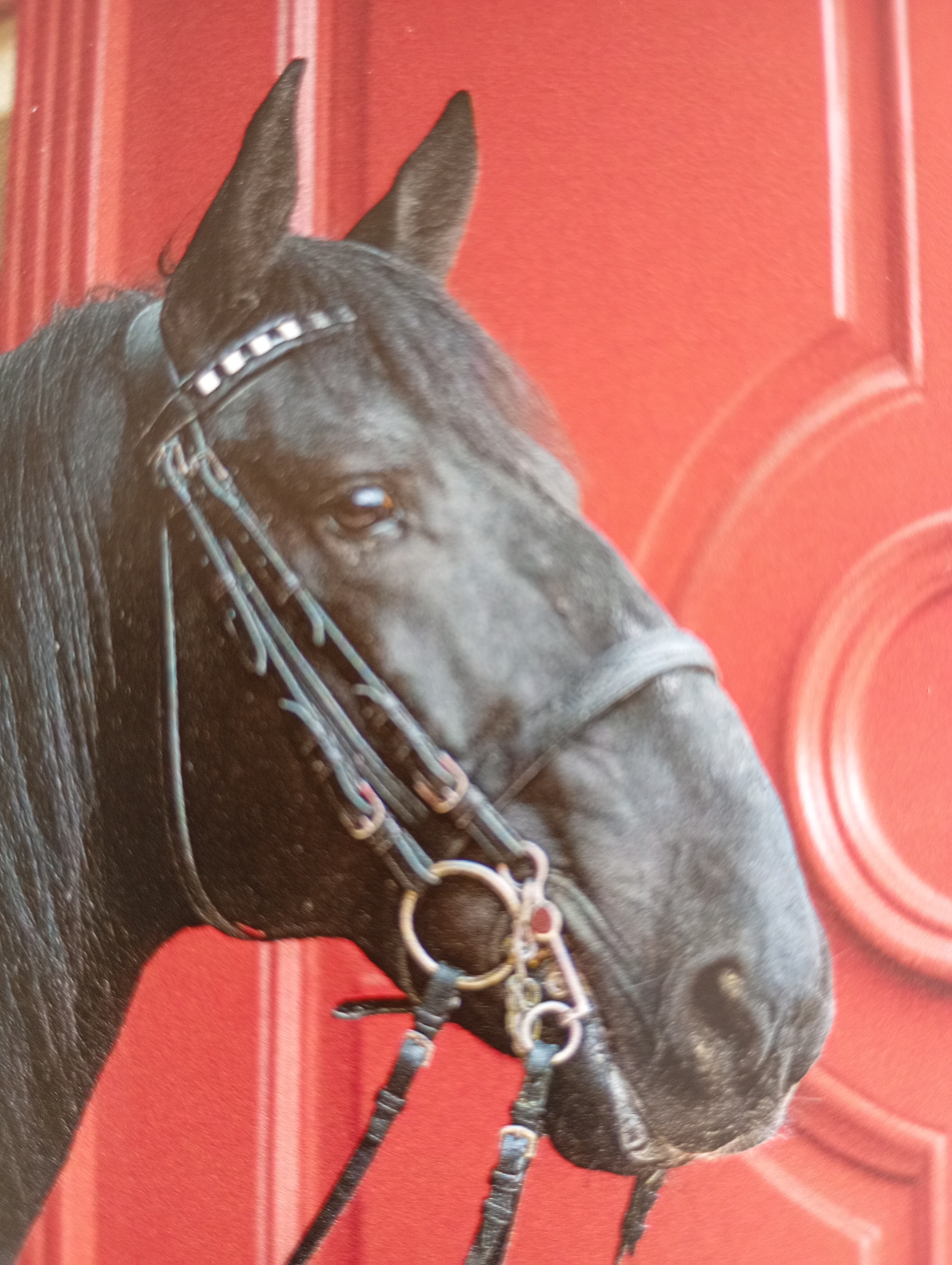
First trip: to the Nursery in Slatinany, where I learned that
- This type of horse horse has a Roman nose.
- They are carriage horses because of their high-stepping gait.
- They are born here and stay with their mothers for 3 years..
- Black horses start out white as babies
- John the midwife to 300 mares had many stories to tell, but they unfortunately couldn’t be translated. (oooh how tantalising!)
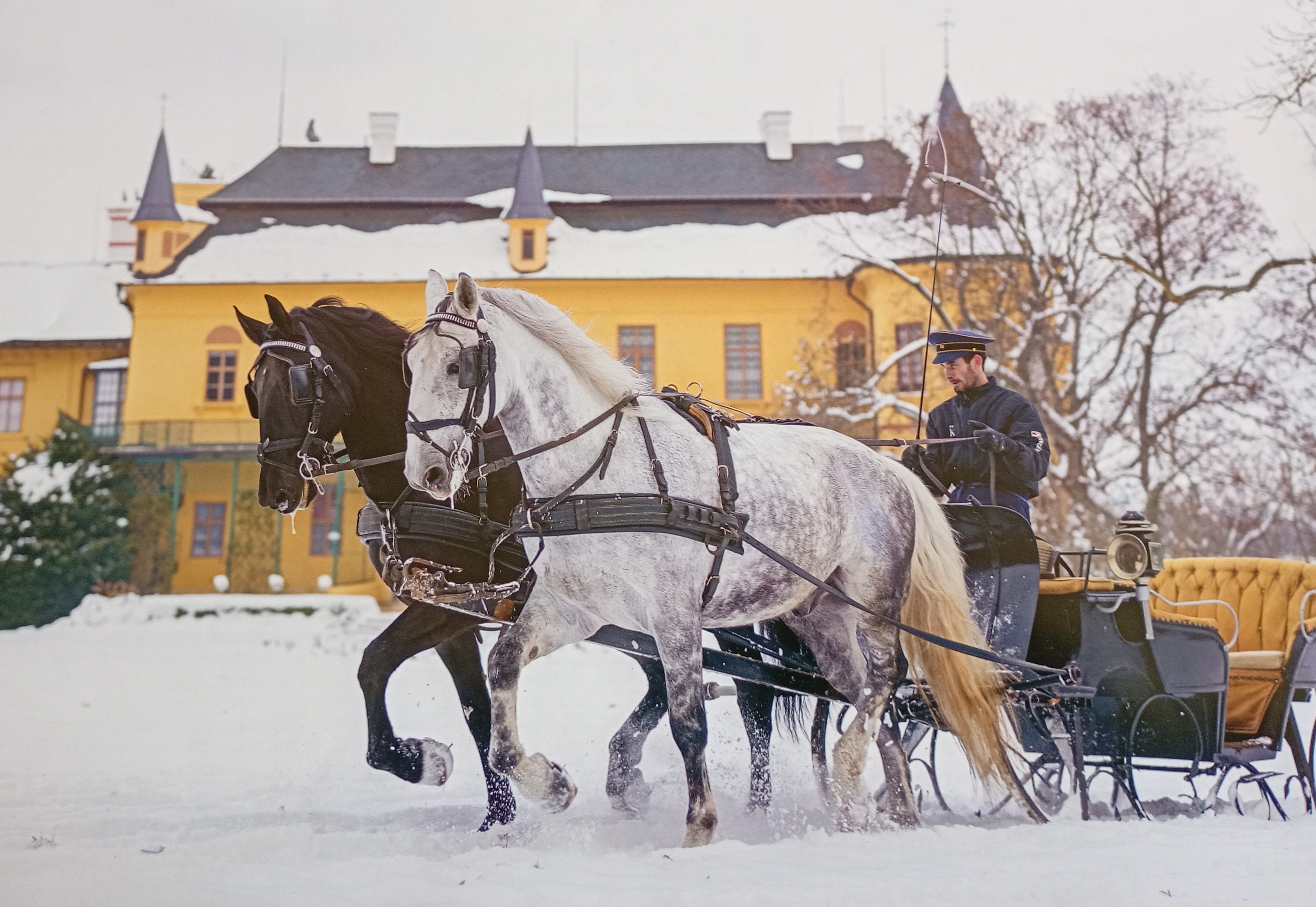
Second trip: Kladruby, the famous national Stud, a national treasure training centre where even Royalty visit to see the horses (Britain’s included). Photo taken from a calendar.
- Long ago, the black horses were being slaughtered as unnecessary and Frantisek Bikel, a geneticist, combed the country to rescue this breed from extinction. He found three stallions and a couple of mares, and built up the hundreds that exist around the world now, combining them with specially chosen Spanish horses. Because of this, each horse’s lineage is of critical t importance, and each stall proclaims the parentage of its owner. (Wow. How depressing and frustrating to be Mr Bikel! But well done!)
- Because of him the Kladruby horses did not die and are among the oldest horse breeds in the world (a national treasure indeed!).
- Mares can mingle with each other, stallions need to be kept separate.
- Stallions weigh 700 kilos, drink 45 – 50 litres of water daily, and eat 10 kilos of hay. Mares are given extra oats when pregnant.
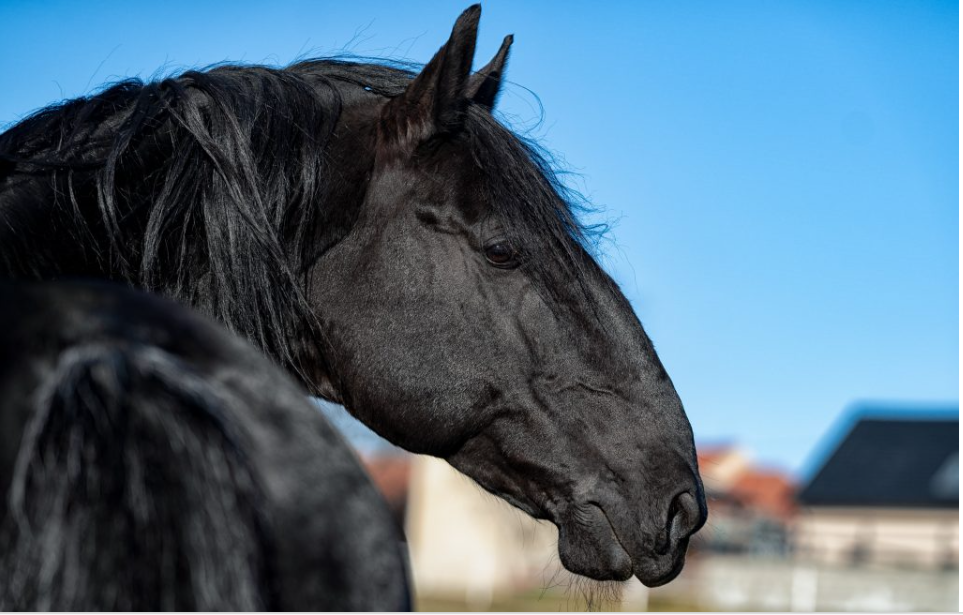
I couldn’t get over the calm, almost worshipful care given to these HUGE beautiful animals. I understand now why Zdena loves them – has loved them all her life. Being a tour guide in Kladruby is a dream-come-true. And she is the best English speaking tour guide in the group. I’m so proud of her.
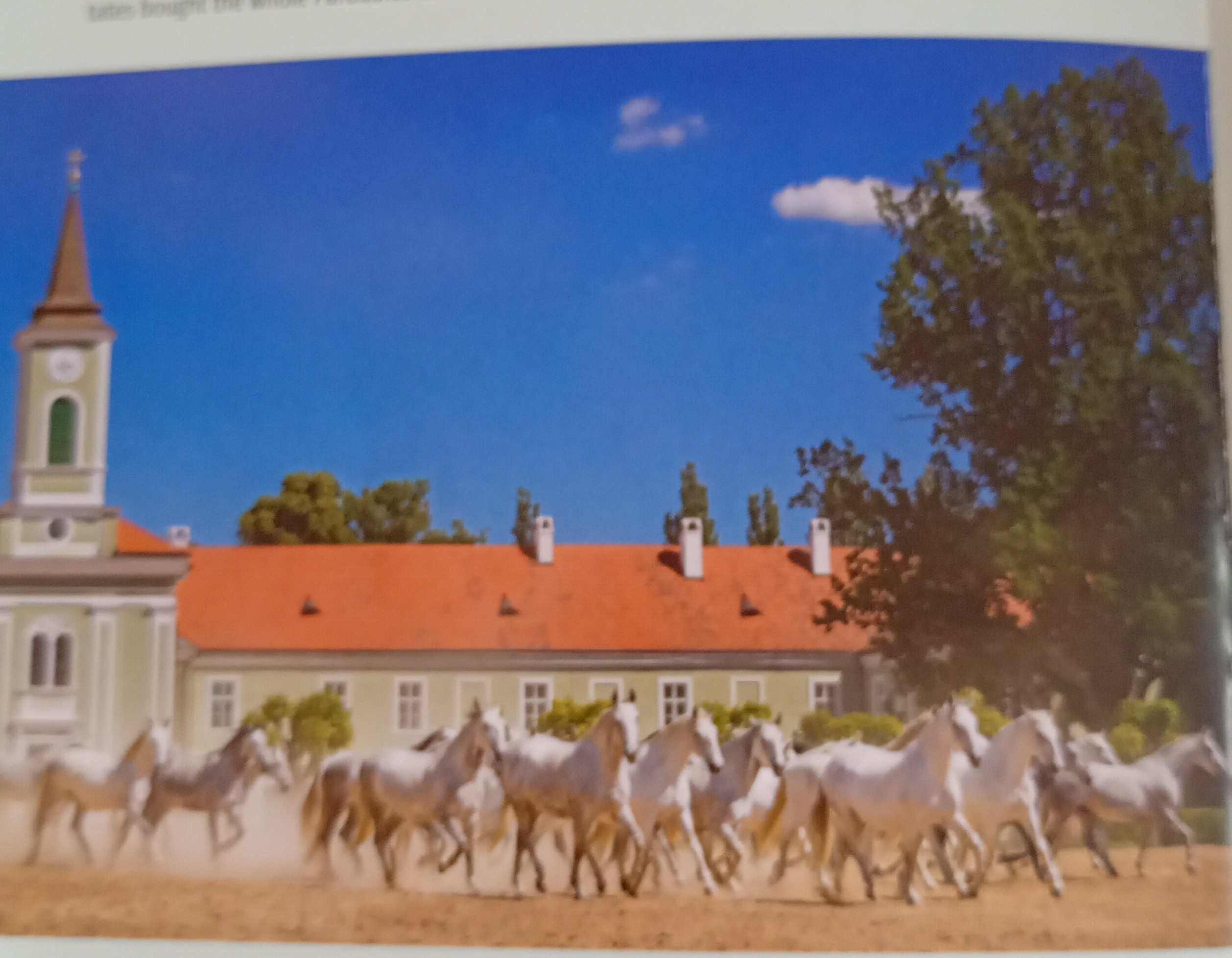
We stood in the dying sun watching the hundreds of horses being brought in from the pastures – a real sight. Their beauty, their size, their magnificence certainly drew from me an unexpected silent awe.
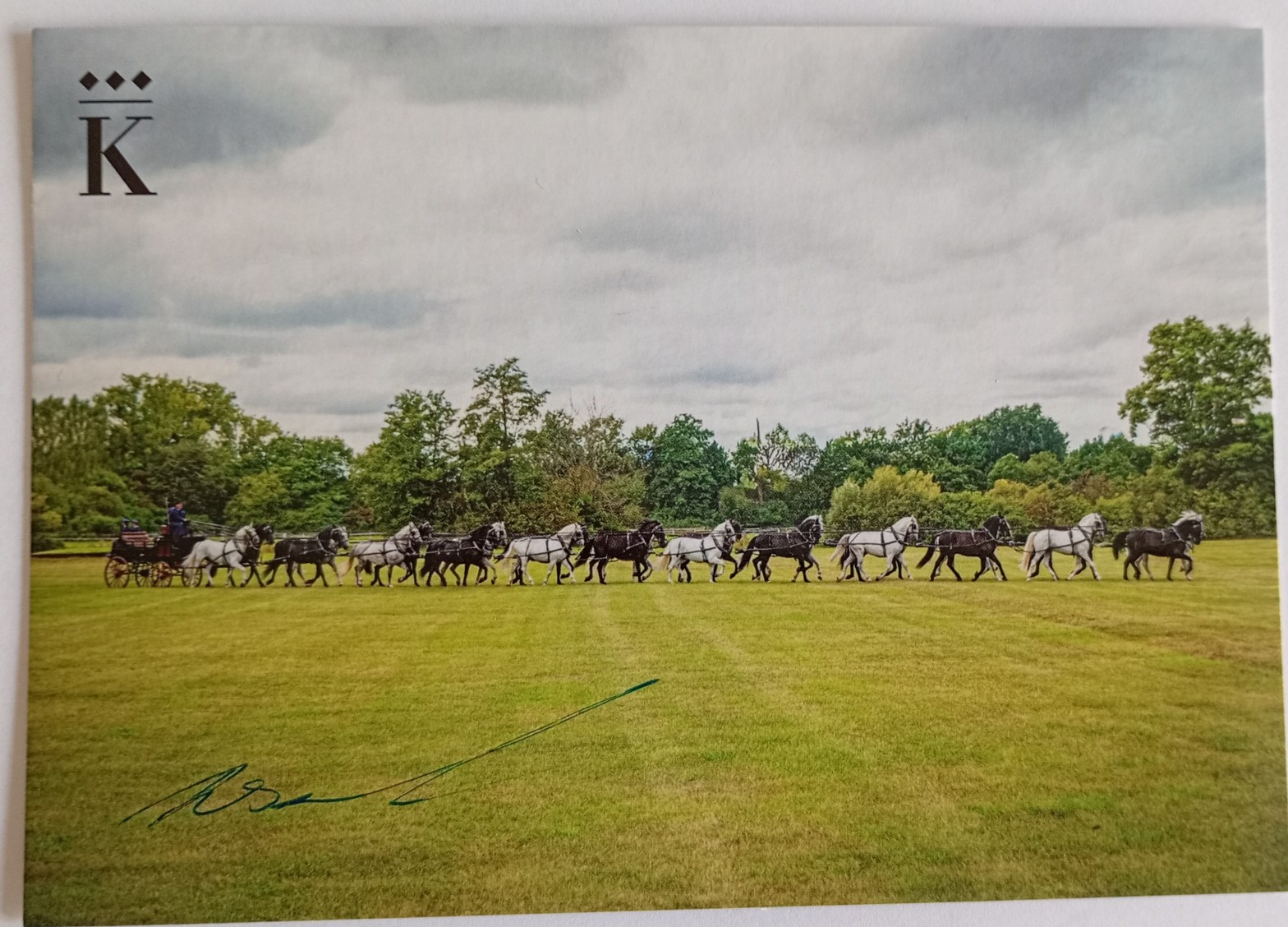
Suddenly a man, a horse, and a boy clip-clopped by us, on their own. “This is the man in the photo, George Nesvacil,” whispered Zdena. “He was the one who broke the record for the number of horses pulling a carriage.”
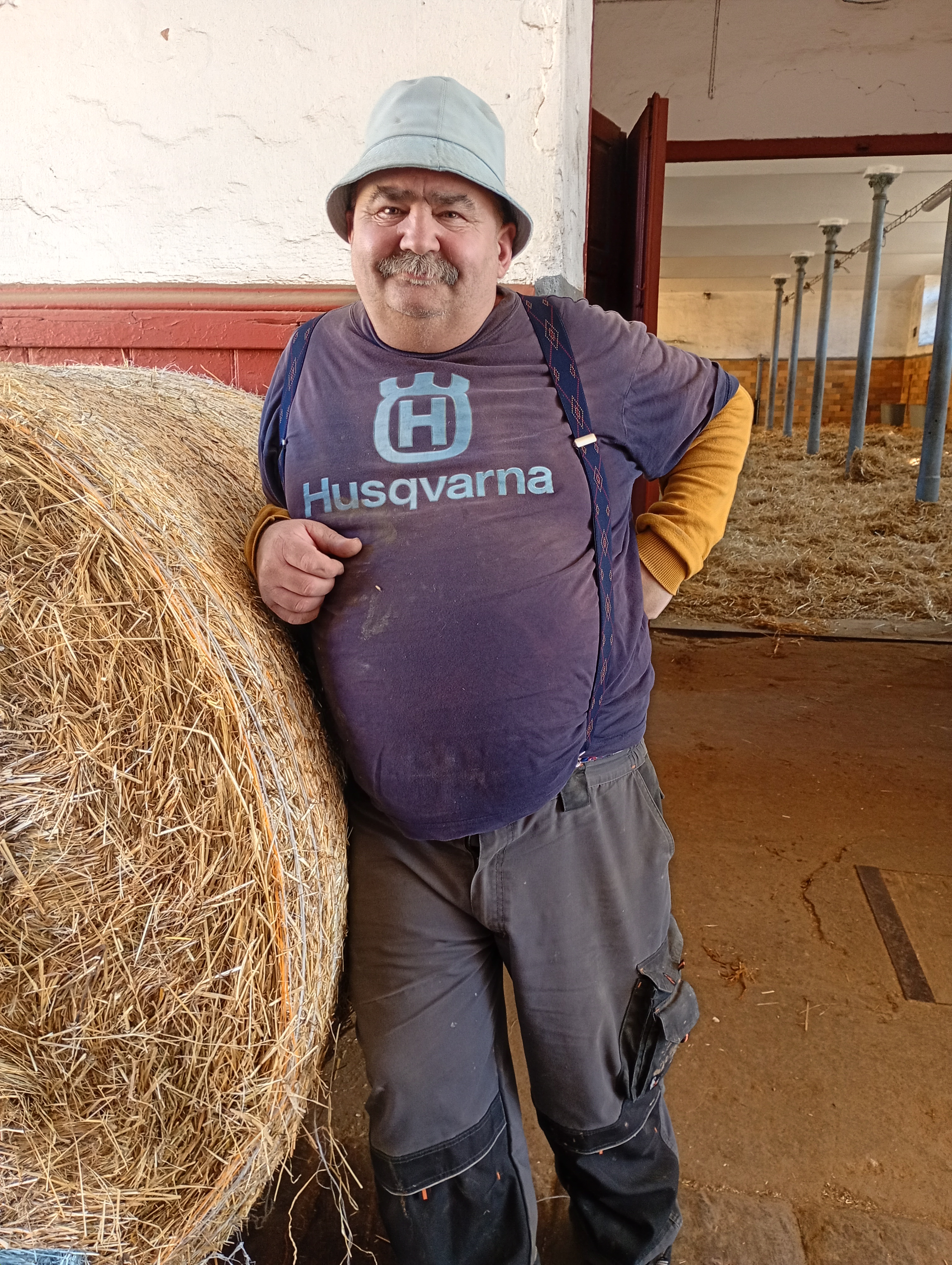
A lot of deferential talking in Czech from Zdena, and a lot of answers from Mr. Nesvacil. Meanwhile, I spoke in English with his 12 year old son, who had been riding horses since he was 4.
Zdena turned to me in English. “He managed to get 24 horses to pull the same carriage at once. He broke a record. No one before had managed so many horses at one time. “
[24? Twenty-four??? How can you hold the reins for 24 horses all at once, let alone lead them?]
She continued translating: “He said, ‘I didn’t know if I could do it. I chose 12 black and 12 white horses, very carefully, and tried it the day before the event. I only tried it once, because these horses are smart, and I didn’t want any of them to start thinking of ways to make it difficult.’”
After more conversation, we said our thanks and goodbyes, but as he walked away, leading the horse, he turned back and said:
“I’m going to Windsor in May with five horses. Shall I see you there?’
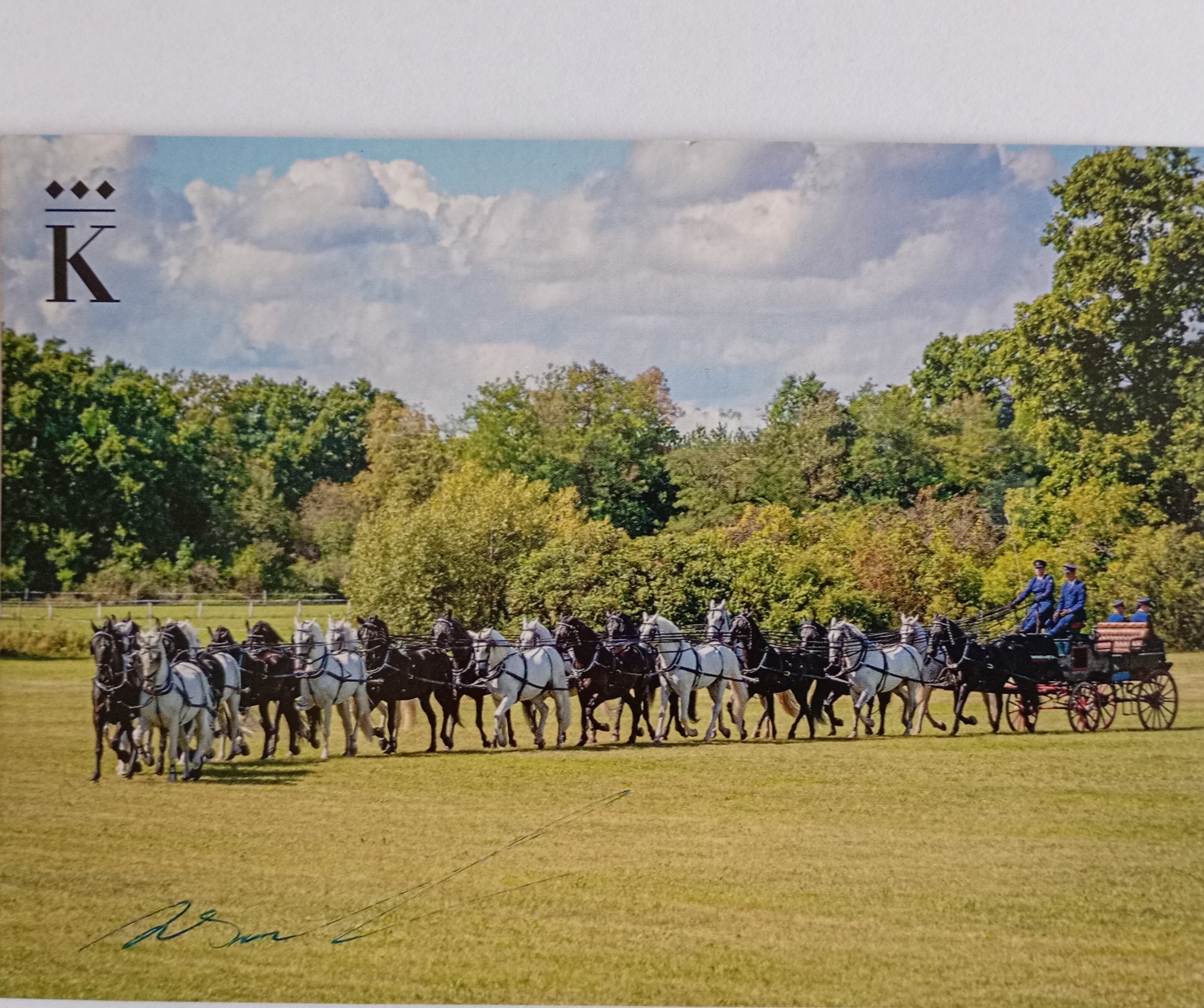
You know???? He just might.
[All photos come courtesy of National Stud, Kladruby nad Labem, (except for that of John the Midwife).]
Havij Pollo
Persian Carrot Rice
Zinging back from Czech Horses to Persian food (as one does) here is a filling for a rice dish which I love. It’s adapted from Claudia Roden’s A New Book of Middle Eastern Food (which is no longer new) and Margaret Shaida’s The Legendary Cuisine of Persia. I will be making it for the Maundy Thursday Supper this year.
Ingredients
Cooked rice for 4, ready to steam.
1 onion, finely chopped
Butter or oil
500 – 750 gms (1 – 1½ lb) carrots coarsely grated
½ tsp ground cinnamon
1 tablespoon tomato puree
A pinch of ground saffron soaked in 1 tbs hot water
30 g (1 oz) sugar.
1 ½ teaspoons advieh * (optional but lovely)
Salt to taste
Fry the onion in 2 – 3 tablespoons of butter or oil until soft and golden. Add the grated carrots and saute gently until soft (10 mins?) Add the sugar, cinnamon, saffron, and advieh (if using). Add the tomato puree and mix well.
Butter a warmable pot or slow cooker, and put half the amount of cooked rice in it, smooth it out, then the cooked carrot filling, then the rest of the rice. Lay a clean towel over the top of the pot (to catch the steam and prevent the rice from sogginess), and then the lid. Heat very gently on the cooker, or heat on LOW in the slow cooker, or pop in the microwave until hot.
The Persians serve it as described, separate but served together. I think that’s because the rice starts to leech out the flavour if served the next day, so enjoy it freshly prepared from the heat, with chicken, lamb meatballs, or other vegetables.
*You can buy advieh on Ebay or Amazon. Or you can mix it at home. Just ask me in the Comments section


 foodthatbuildscommunity.com