
My grandson Joseph is completing High School. He has to take 19 exams for his General Certificate in Secondary Education (GCSE). His finishing date for High School – the statutory date – was ten days ago. He still has 8 more exams to go…they range from one to three hours long. All are set by the Government, not his teachers. To me, some of his academic requirements are university-level.
Joseph has studied hard and is taking Exam Time stoically, unlike his great grandfather, my Dad, a brilliant physician, who experienced nausea and vomiting for exams he took in college, medical school, and advanced qualifications. Exams don’t come easily to some people.
Being a teacher, I’ve been linked to the education system ever since I was 5.
As a Learner
China. I started school, being taught by my mother, with the Calvert Correspondence course. Mom never let us see her teachers’ manual but did allow me to count the number of white pages before we came to green pages. Green pages meant test!
India. Studying in a school in the Himalayan foothills, I remember having one exam for each subject at the end of high school, not 18. In addition, there were major projects that needed completing – a lot of work, but usually on a subject we chose.
Ohio, USA. I went to a women’s college for my BA degree. We had the honor system for everything – signing in at night if we went off campus, …everything. When it was time for an exam, we’d go in sun halter and shorts. The teacher would hand out the papers. We would check to see if each page was printed properly, and all was fine. Then the teacher would say, “I will be back here in three hours to collect the papers.” Then we would go off to sit under a tree, or to the library or anywhere, and write the paper, bringing it back within the three-hour deadline. The questions were formulated by the teacher, and the content was familiar. The Government also undertook an honour system, trusting university teachers to assess each student as to her capability to be awarded a Bachelor of Arts.
If we were in the exam room, and saw someone cheating, we were supposed to tap three times with our pens to alert the others. In four years of study there, I never had to.
Britain. So! When I arrived in England and was doing a Post Graduate Diploma, the exam system was a shock! Legal documents plastered outside the room. Names seated alphabetically. Each chair at each desk exactly one metre apart, deathly silence, pacing invigilators, the works!
As a Teacher
Egypt. “If they groan when you walk in to proctor an exam, that means you’re doing the right thing,” said my friend Carolyn. We were two Americans teaching in a school in Assiut. As usual, we didn’t allow any cheating or leaving the room. We were used to the whole exam procedure and adhered to it. The Head teacher didn’t. “How can I stop them,” she would say, “they’re friends! Friends help each other.”
Iran. I taught in a women’s school in Tehran, a mixture of the wealthily privileged, and daughters of tribesmen from the villages (the most assiduous students). Exams were supervised strictly, of course. The twist came later. Surly rich fathers would swagger into the Bursar’s office: “All right, where do I pay?” they’d say.
“Pardon?”
“I understand my daughter has failed her exam. Where do I pay to show that she’s passed?”
Then would follow the shock that the failed grade remained unaltered.
Bedfordshire, UK. I taught adult literacy. Most of our students had missed out at a critical time in their lives when reading was just introduced (eg measles) and never caught up. With all the care taken to student learning need these days, I think there is a better understanding of an individual’s growth path.
What do you think?
We used to tell businesses that the pressure of a timed exam was unnatural to real living, when people could pace themselves more effectively. Their response: they needed candidates who could work under pressure.
We also told them that when they required Maths, did they really mean arithmetic? Older people tell amazing stories around here (UK) of Friday afternoon mental arithmetic sessions. [Teachers take note: mental arithmetic = no papers to correct!] I don’t think they teach this anymore. Joseph has one maths exam with calculator, and one without.
What do you think? Write me a note or put your thoughts in the “Comments” section. It’s always great to hear from you.
Chelsea Buns
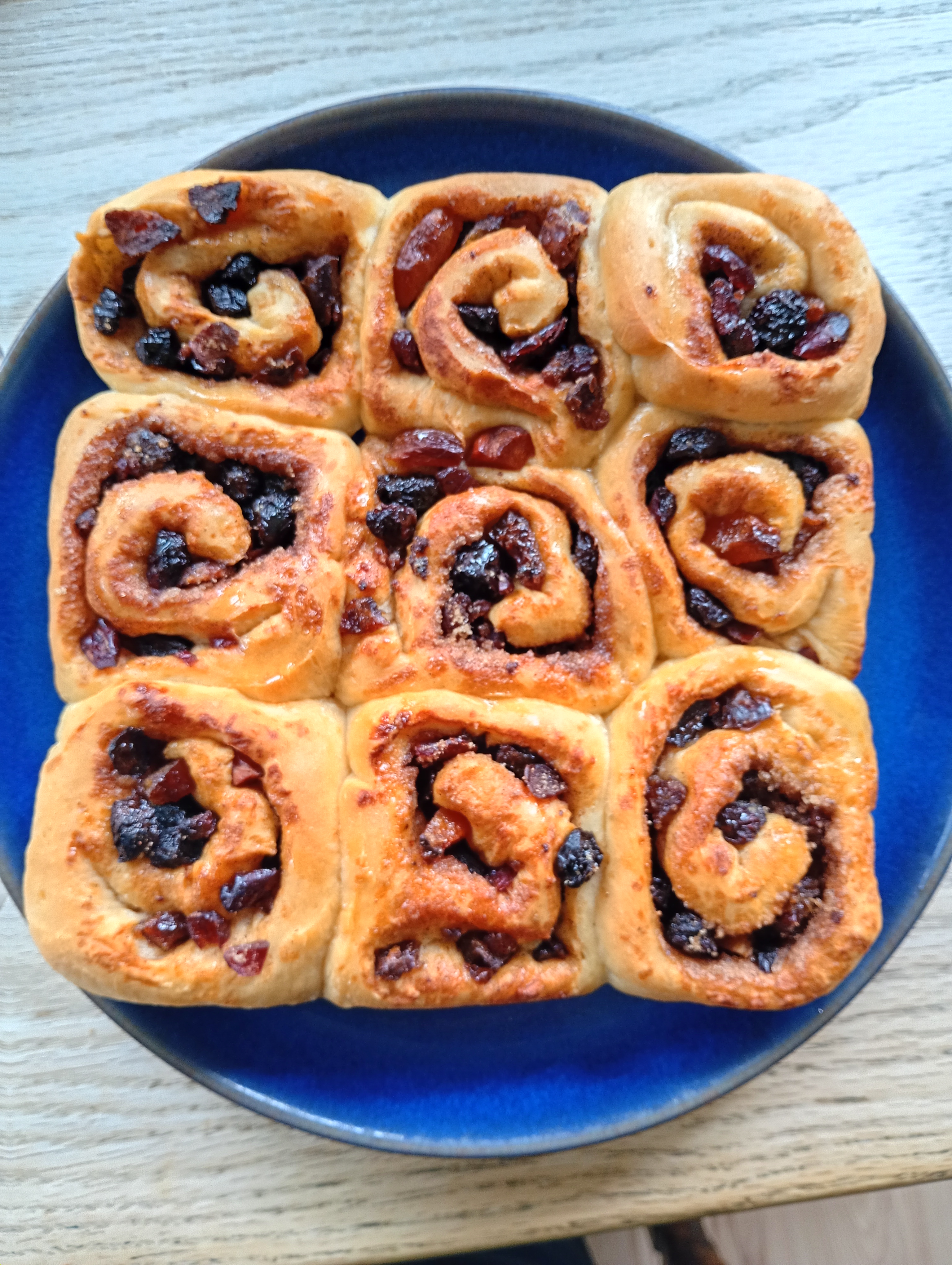
Always have comfort food on hand when there’s a whiff of an exam in the air.
First, you need raw dough. Some people can get it from their artisan baker. Others look in a Pillsbury roll tin. Or you can whip it up yourself, this way:
The dough:
225g (8 ozs) high protein bread flour, about 2 cups.
1 Tablespoon yeast that mixes with dry ingredients (doesn’t demand soaking in liquid).
½ teaspoon salt
Mix together.
Now the liquids:
3 tablespoons soft butter, 1 beaten egg, 4 oz (1/2 cup, 100 ml) warm milk.
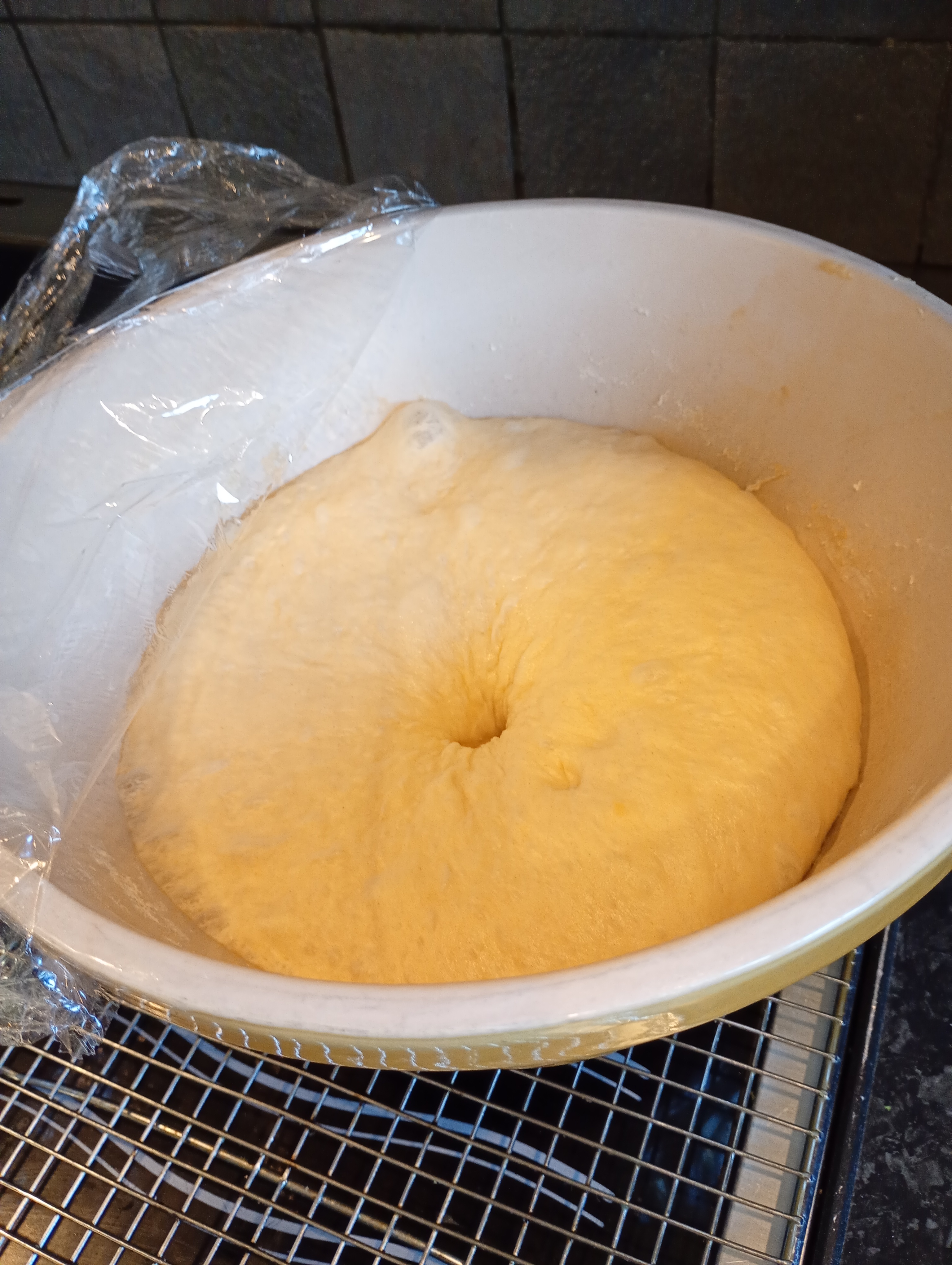
Make a hole in the middle of the dry ingredients and add the liquids gradually, stirring and beating all the time (you want the gluten molecules to lengthen, making the dough stretchy). Stir and beat until the dough leaves the sides of the bowl. Knead, by folding and pushing and messing about, for about 10 minutes. Voila! A nice smooth ball is plopped back into the bowl!
Cover and leave in a warm place to rise, about an hour. It is ready when you poke a finger in the dough and the hole remains.
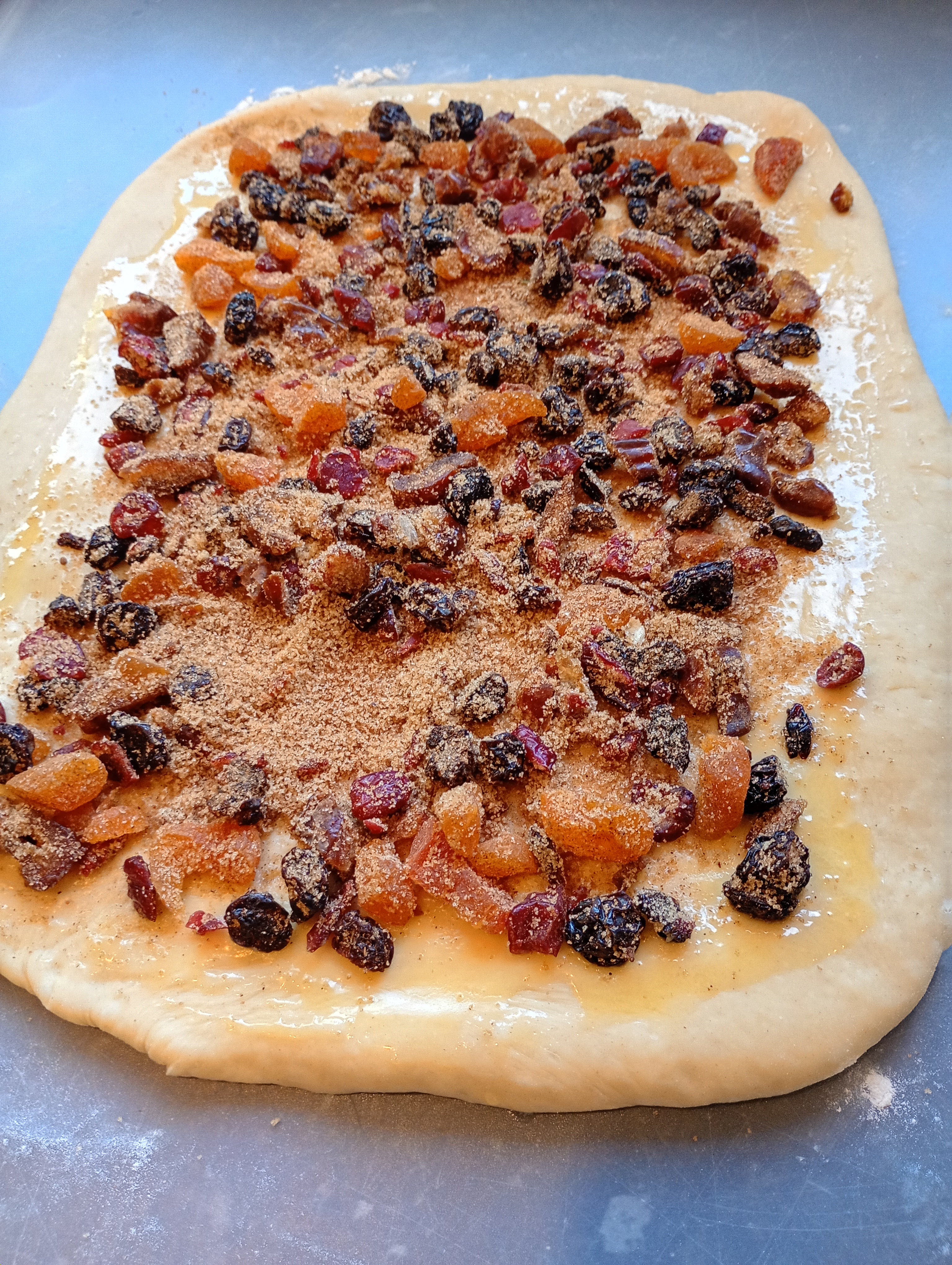
Meanwhile in a small bowl mix together 100g (4 oz, 1 cup) chopped dried fruit – your choice. I used raisins, dried cranberries, chopped dates, and chopped apricots. You can also add nuts. Add 50g (2 oz) 1 cup soft brown sugar and squoogle it all together. Optional: add cinnamon, nutmeg, and ground ginger into the mixture.
Roll the dough on a floured board, into a rectangle 30 x 20cm (12 x 9 inches). Brush with more melted butter, and sprinkle the fruit-sugar mixture over the whole dough leaving the edges bare.
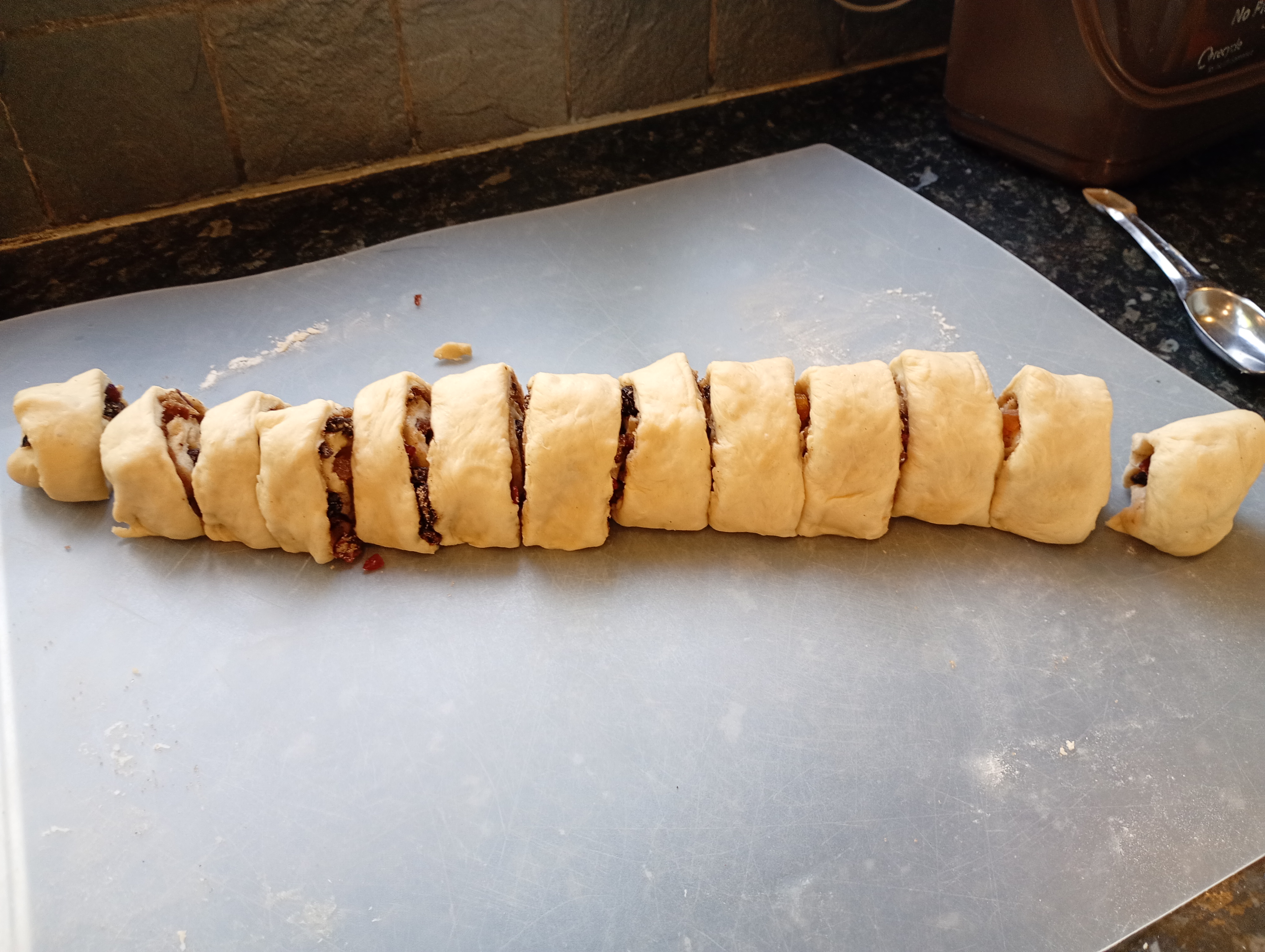
Starting at the rectangle’s long end, roll up, sealing the end securely. Don’t roll it so tightly that the inner dough doesn’t have room to expand.
Cut into 12 slices. Place cut side up in a greased or papered square tin (17.5 cm or 7 inches). Cover and leave in a warm place until puffed up, say um, about 20 mins?
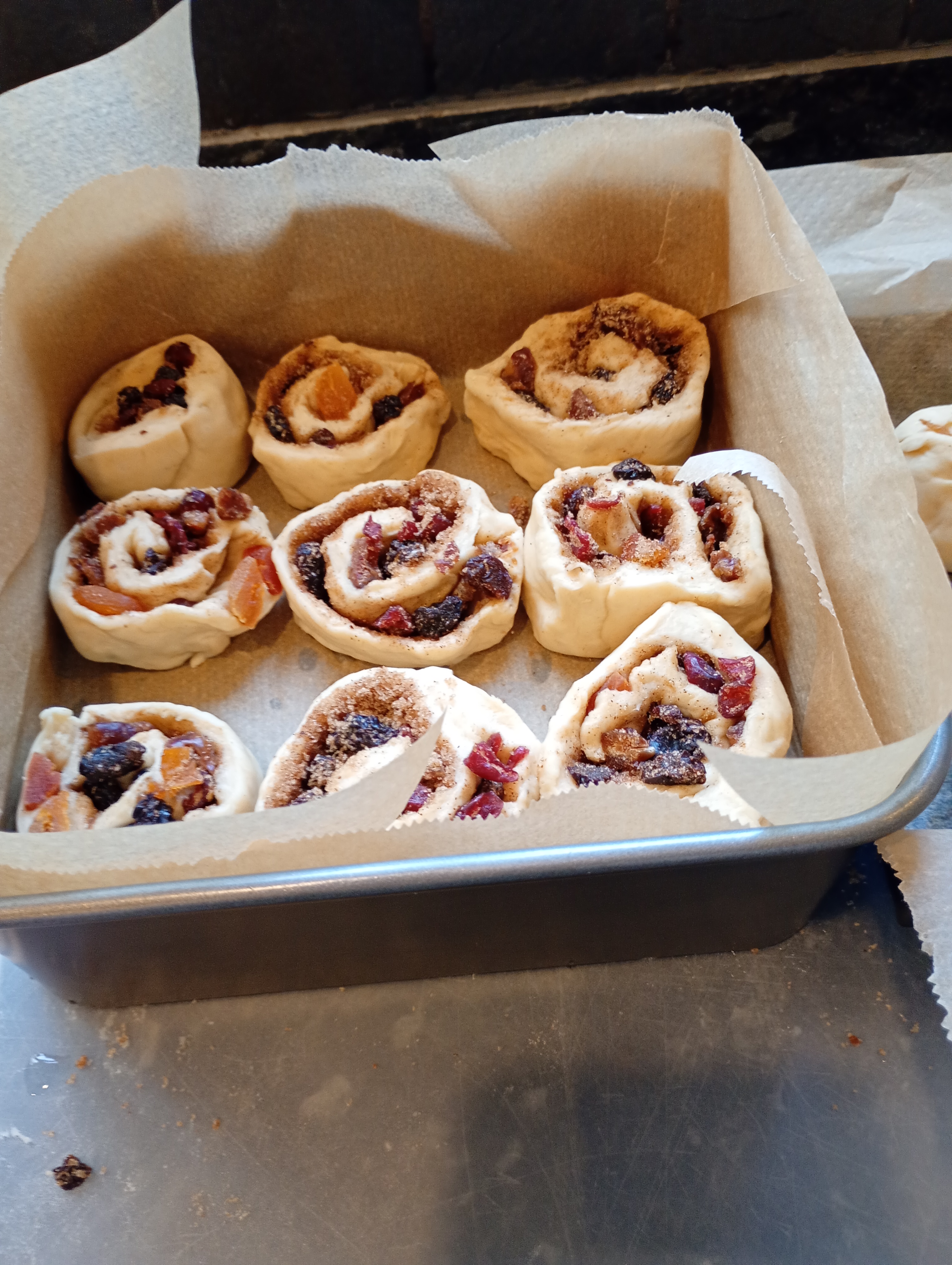
Bake the rolls 375 degrees Mark 5, for 30 minutes, until golden brown. Brush them with honey or maple syrup while still hot. Serve them warm (and I like to add butter when eating!).
This recipe is adapted from my ancient The Dairy Book of British Food. I gave some, fresh from the oven, to the GCSE families in our street. Everyone is affected during Examination Time.



How l remember the dreaded Friday mental arithmetic test. I can recall to this day the number of times l was made to stand up in class as l had failed to reach the “pass mark”. I got to feigning illness on Fridays and have never enjoyed maths since then!!
LikeLike
Considering your work with finances now, mental arithmetic wasn’t even necessary!
Thanks, Pam.
LikeLike
Reader’s comment: some people just take exams for granted.
LikeLike
At school I passed nearly all my exams, doing badly only in history, sport, music and art.
Those are interests ( NOT subjects) I have enjoyed through life and still enjoy as activities in my 80s.
I think it is important to maintain interests, especially those shared with others, throughout life.
LikeLike
Cinnamon rolls – go to comfort food!
Exams? No comfort…
I took 14 exams in 9 subjects, plus a French oral for my GCE “O” levels. My grandchildren here in New Zealand needed a certain number of credits to be gained over 3 levels, some by exams spread over their last 3 years but most by marked course work, to graduate from High School – both more humane and more sensible, to me.
LikeLike
Yes. I agree. Some people just aren’t made to take exams….my Dad, for one of them. He had loads in order to become a heart specialist. But exams? Terrified of each one.
LikeLike
11 plus exam in divided N Ireland
In Northern Ireland in 1950s RC children were forced by their church to go to RC schools. In Enniskillen, my home town, to prevent the teachers helping their pupils pass, Protestant kids were sent to the RC school for the vital 11 plus exam, and Catholic kids went to the state primary school. Passing the 11 plus enabled you to go to a grammar school, also segregated by religious denomination. I have long been a supported of Integrated Schools in Northern Ireland to break down the barriers in the community.
LikeLike
Absolutely, John. What if someone changes denomination — do they change schools???
LikeLike